.webp)


Key takeaways:
- Podcast guests bring expertise, value, and fresh perspectives to your podcast.
- Use social media, tap into your own network, and ask your listeners to help you find your next guests.
- If you have the budget, consider paying a service or agent to connect you with a potential guest.
- It’s worth investing in podcast interview preparation to ensure a smooth recording experience for yourself and your guests.
The right podcast guests make an episode.
And, luckily, you don't need a big network to find people worth interviewing. You need to know where to look, how to ask, and how to get them recording-ready.
I'm Kendall, Riverside’s community manager and webinar host. With my hosting experience, and years as a journalist at NBC and Bloomberg, I’ve learnt a lot about finding and booking guests. I also sat down with 3 hosts who are experts at booking guests, and have snagged interviews with names like Mel Robbins.
Below I’ll share 13 ways to source podcast guests, plus how to invite them and prep for the interview.
13 Ways to find podcast guests worth interviewing
Here are some strategies for finding interesting podcast guests for your show:
Keep your eyes & ears open
Keep your eyes open and create a running list of any interesting names you come across, so you always have a backlog of potential candidates. You may encounter potential guests while reading articles, watching TV, attending events, listening to podcasts, or browsing social media.
I recommend adding a line on why they'd be a good fit, so you immediately know what episodes they’d be best for.
Ask within your personal network
Ask your friends, family, community, and personal social followers if anyone knows someone worth interviewing.
Make your request specific by describing the topic and experience you need. For example, ask whether they know a cybersecurity professional who has handled a ransomware incident or a teacher who uses AI in the classroom.
Use your podcast production team
Ask your co-hosts, producers, and editors to bring you names too.
Sharing the search reduces the burden on you. But also, their networks don't overlap with yours, so you open your guest search to more opportunities.
Catch guests during a press window
Reach out when someone already has a reason to want interviews, for example close to a book launch.
Matt LeBris, host of the Decoding Success podcast, which has featured Mel Robbins and Grant Cardone, says:
"The most important thing I've learned is identifying when a person is looking for press."
Here's his Amazon hack, to find those press windows for free:
- Go to Amazon and open the Books category.
- In the sidebar, filter by release date. Look at the next 30 days, next 60 days, or next 90 days.
- Narrow your search by category to match your niche, whether that's self-help, politics, sport, or business.
- Pitch authors with a release three or four weeks out.
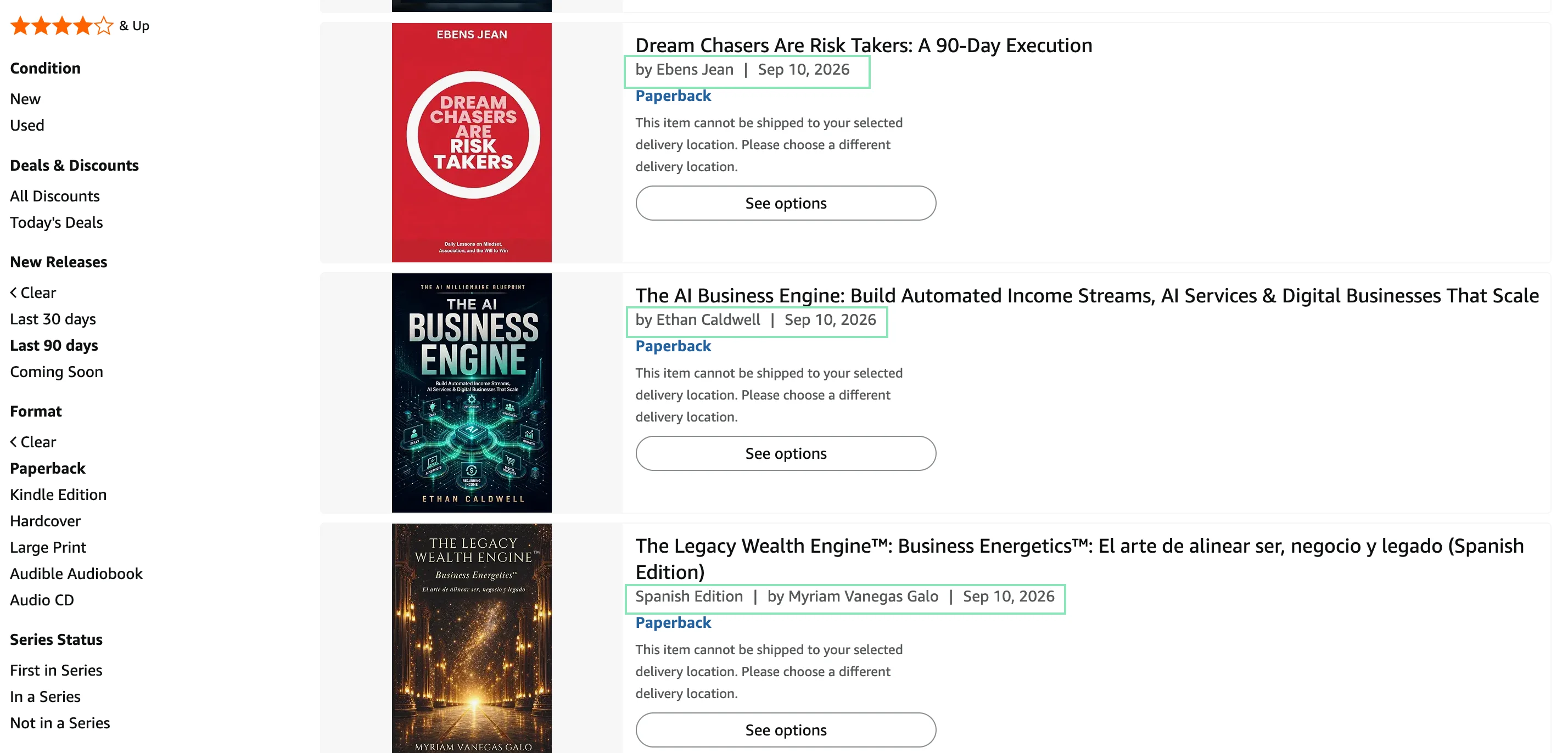
Jamie Maglietta, who spent nearly 20 years in television news, says this is what TV news producers and guest bookers do all the time. She recommends also looking at event listings, or book signings in your area for in person guests.
Use your website to attract guests
Add a "be a guest" page with a short application form, then link to it from your main navigation and your show notes. If you have a website properly indexed on Google and major search engines, potential podcast guests can find you.
On the form, ask for their name, topic, relevant experience, and a link to something they've done to filter out mass pitches.
Research the topic, not the person
Try starting with the topic, not the guest. Instead of focusing only on a large social media following, look for experts who are cited repeatedly in their field.
Pick a subject you want to cover, then read up on it and note whose names keep appearing. Look through journals, conference speaker lists, or expert-led papers.
The people who have an untold story can be much more interesting than the ones with the biggest audiences. And are far more likely to say yes.
Look at businesses
If a business or product catches your attention, find out the key players who built it.
Don’t automatically approach the founder or CEO. I suggest reaching out to the product lead, researcher, or engineer in charge instead. They’ll likely have a freer schedule and more direct experience.
Try LinkedIn or other business networking platforms to reach out.
Ask your listeners
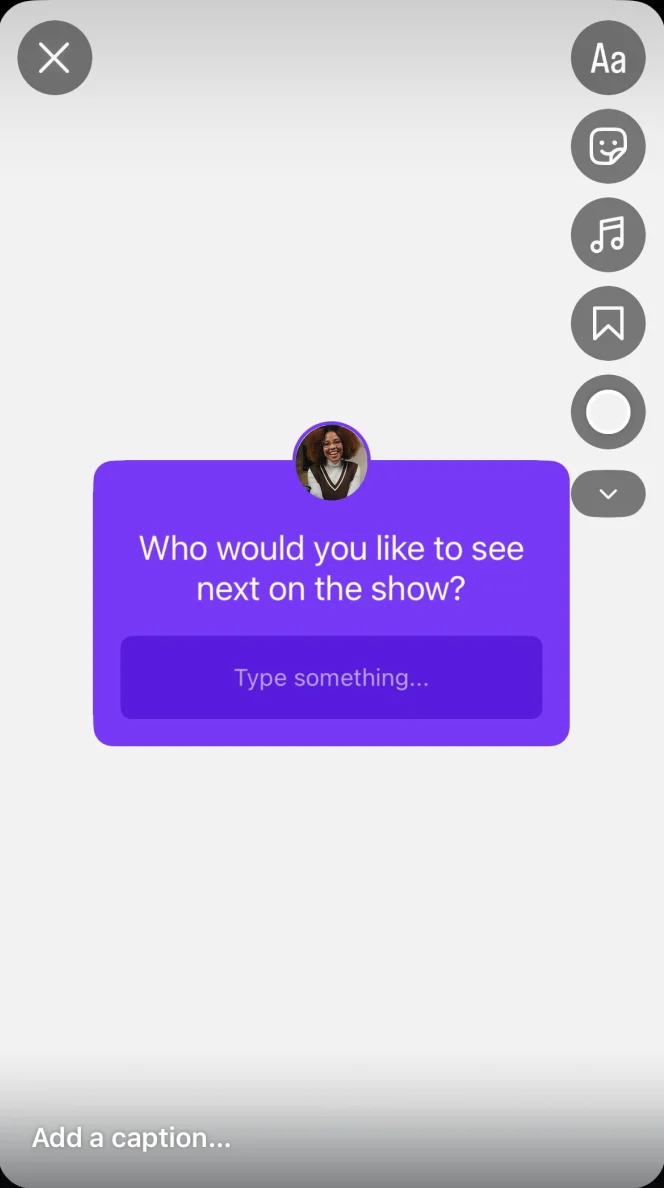
Put out a call for recommendations during your episode intro or outro, or run polls on social media. If you already get unsolicited pitches, add a guest application form to your website so they arrive in one place.
Your listeners will suggest people they actually want to hear from, which makes booking them as much a retention play as a sourcing one.
Harness social media
Search social media platforms like LinkedIn, X, Instagram, TikTok, and Facebook for people posting about your topic.
I specifically recommend looking past your guest’s polished professional profile. Personal posts reveal interests that make a guest more relatable or open an unexpected angle. Someone discussing their love of restaurants, for example, might offer an unexpected analogy for a marketing or business episode.
Ask your previous podcast guests
.webp)
Don’t forget to ask your previous podcast guests for recommendations and endorsements. If you’re lucky, they’ll make a personal introduction, increasing the likelihood of getting that person on your show. This is another way to jump outside of your own bubble.
I always ask my guests “who else do you think I should speak to?” Even if that's a dead end, a guest who can't help will still keep you in mind for later.
Listen to other podcasts
Mine other shows in your niche for your own guest list.
You can poach their guests and invite the same people to your show. But you can also take note of the kind of people they’re interviewing to inspire your own guest list.
I’d also use this research to find interesting angles. For example, you can take something a guest said in a previous interview, and ask an unanswered follow-up. Taking a different angle from previous interviews will also ensure that you’re not just repeating or copying another creator’s content.
Don’t forget traditional outlets
Check traditional media like newspapers, magazines, TV, and books. Take note of who writes your favorite columns or articles, or what people are in TV interviews. You can also look at the authors of the books you enjoy (and the people they cite).
Pay an agent to find a guest for you
If you’re really having trouble finding podcast guests or simply don’t have the time or energy, try paying a service to find someone for you. There are several booking agencies out there that connect podcasts with guests and vice versa. If you’ve got the budget, this is an extremely time-effective way to nail down an impressive podcast guest.
Free expert tips: Download this guide from Dream Guest Blueprint to learn the tactical steps, strategies, tools and mindsets to land your dream guests on your show.
Best online resources for finding guests
Here are the top directories and communities to help you connect with your next interviewee.
Social Media
As we touched on above, social media is a powerful tool for helping you to find a podcast guest. To make the most out of each platform, you’ve got to make sure you’re using them effectively. Here’s how:
- Instagram: Post on your personal and podcast’s Instagram feed and stories asking for guest recommendations. Look at who previous guests follow and look at popular accounts.
- X (Twitter): On X, you should use hashtags to look for podcast guests. Also, search using hashtags to find accounts that are vocal around your specific topic of interest. Look at who those accounts follow too.
- LinkedIn: Post a call for guests to your professional network to find subject-matter experts. Use the search bar to find executives or experts at specific companies you admire.
- TikTok: Use the “For You Page” to find popular TikTokers who might make good podcast guests.
- Facebook: Use Facebook Groups and pages to find interesting people to interview. This works best if you already have a niche topic in mind. Don’t forget you can always join our group Conversation Creators by Riverside!
PodcastGuests

Podcast Guests is a website that connects podcasters with guests. You can sign up for their free, twice-weekly newsletter to see a curated list of guests actively looking for interviews. Or, browse its guest directory and invite relevant experts for free.
If you’re a guest and want to be listed in their expert directory so hosts can find you, they offer a premium listing for $29 per month.
PodMatch

Podmatch likens itself to a dating app but for podcasts. It uses automated matching technology based on details such as availability, compatibility, and even administrative details. The cost is only $6 a month forPodMatch on a Standard subscription.
MatchMaker.fm

Matchmaker.fm is, as their name suggests, a matchmaker for podcasts and potential guests. You can search their directory, send direct messages through their platform, and browse their “Automagic” recommendations.
You can start using MatchMaker for a 30-day trial with 5 free conversation starts. Continued access costs $15 per month.
Podcast Guest Collaboration Community

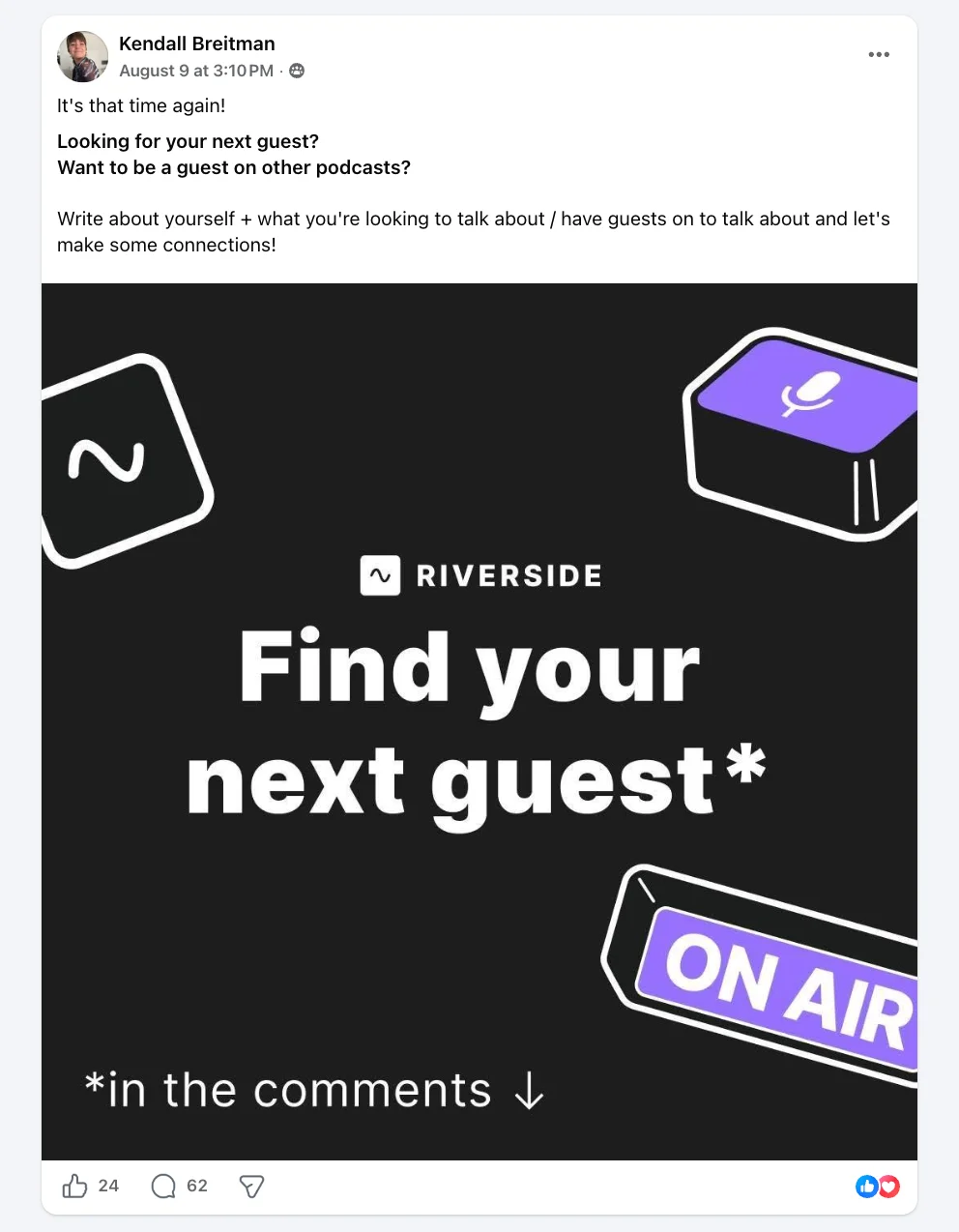
You could try posting in this Facebook Group that’s all about connecting interested guests with compatible podcasts. With more than 75K members, this is a great place to start.
When posting, explain exactly what is your podcast topic, audience, interview format, approximate recording length, and any location or equipment requirements. A generic pitch may end up being ignored or buried. Be mindful of the group guidelines when posting, too.
RadioGuestList.com

RadioGuestList.com (formerly FindRadioGuests.com) is a free email booking service operating since 2008 that lets you find potential guests.
You submit a request form detailing your show and the type of expert you need. They publish your request on their site and email it to a large list of authors, experts, and publicists who will then pitch you directly.
How to invite a podcast guest
When you reach out to a potential guest, you have to make it easy for people to say yes.
If you record in person, offer to meet them at their office for a quick 30-minute session. For remote interviews, put your calendar link and a Riverside studio link directly in your initial pitch email.
Be specific about what you want to discuss, especially when approaching someone who isn’t actively seeking publicity.
Here are two outreach templates you can adapt and use immediately:
Contacting podcast guests via email template:
Hi [guest’s name],
I host [podcast name], a show focused on [your niche]. I recently came across your work on [specific topic] and I loved your approach to [specific detail].
Because my audience is eager to learn more about [core theme], your experience would be incredibly valuable to them. We would also promote the episode and your work through [website, newsletter, or social media channels].
I would love to invite you for a quick [number]-minute interview. We can record remotely using [recording platform], or I can come to [their office, classroom, event, or another convenient location] if that’s easier.
If you’re interested, you can choose a suitable time here: [scheduling link]. The recording details will be sent automatically.
Are you open to joining me for an upcoming episode?
Best,
[Your Name]
Contacting podcast guests via social media template:
Social media direct messages need to be much shorter than emails. Get straight to the specific value they bring and provide the calendar link immediately, or record a short video and drop it into their inboxes.
Hi [guest’s name]! I enjoyed your [post, article, interview, or other work] about [specific subject].
I’m [your name], host of [podcast name], a show for [target audience] about [industry or niche]. I’d love to invite you for a fast, [number]-minute remote interview to discuss [specific topic] and share your perspective with our listeners.
To make things easy, you can grab a time that works for your schedule right here: [scheduling link]. We can record remotely using [recording platform] or meet somewhere convenient for you.
Are you open to a quick chat?
How to be a podcast guest yourself

Getting booked as a guest is a highly effective way to build authority and reach new audiences for your podcast.
If you’re looking to become a podcast guest, follow these simple steps.
Craft a concise pitch
Start by creating a concise guest profile and a pitch showing whose audiences would genuinely benefit from your experience. The best podcast guest isn’t necessarily the person with the biggest following. What matters is that you understand your subject and can offer listeners a useful perspective.
Cold email template for pitching a podcast:
Hi [host’s name],
I enjoyed your episode about [specific episode or idea], particularly [brief personalized detail].
I’m [one-sentence description of your relevant experience]. I’d be happy to join [podcast name] to discuss [specific angle] and give your audience practical guidance on:
- [Useful takeaway]
- [Useful takeaway]
- [Useful takeaway]
You can find examples of my work or previous interviews here: [link].
Would this be a good fit for an upcoming show?
Best,
[Your name]
Find relevant podcasts to approach
The matching platforms we included in the section above make discovery easier. You can also pitch a specific podcast directly if it isn’t listed on one of these services.
Listen to a few recent episodes before reaching out so you understand its tone and the subjects it has already covered. Then personalize your pitch rather than sending the same message to every host.
Prepare concise talking points
Once you get booked, anticipate the host's questions and decide which examples and practical advice will support your answers.
Jamie Maglietta, who trains professionals to be interview-ready after nearly 20 years in television news, recommends:
"Try to think about all the questions that you may get asked and how you would like to respond, and then once you've typed up or thought through how you would like to respond, shorten it in half."
During the interview, you should complement the podcast you’ve been invited to rather than overshadow or redirect it.
As Alex Sanfilippo, founder of Podmatch, also recommends, find common ground or a shared goal when you and the host disagree. That mutual understanding gives the conversation direction and helps you keep it focused on the audience.
How to prepare a podcast guest
For the best experience, prepare your guests up front. Start with this video and then use the below checklist to prepare for the interview:
Step 1: Send the interview details in advance
Find out as much as you can about your guest and their work in advance, then prepare a short bio so they can review it and suggest edits.
Reach out to your guest to see if there’s anything specific they’d like to discuss or promote. Explain whether the conversation will be structured or informal and share the planned topics, interview format, approximate length.
Lastly, write down topics and specific interview questions to prepare a quick script to guide you during the episode.
Step 2: Confirm the interview setup
Instead of overwhelming your guests with a generic technical checklist, send them a practical reminder about 24 hours before the recording.
Angela Hollowell uses this email to tell guests everything they need to arrive prepared, making the process effortless.
Include these essential details in your message:
- Wardrobe and lighting: Suggest what clothes look best on camera and remind them to face a good light source.
- Environment and audio: Advise them to find a quiet space and clarify if they need to wear headphones.
- In-person logistics: If you are recording face-to-face, provide clear parking instructions, directions to the exact room, and your direct phone number in case they get lost.
Step 3: Do a same-day check-in
On the morning of the recording, send a quick message to confirm the recording time and link. With Riverside, your guests can join from their computer or mobile, depending on their preferences
Ask the guest to join a few minutes early so you can ruin a quick tech check and ask any last-minute questions.
Step 4: Set the tone before the interview
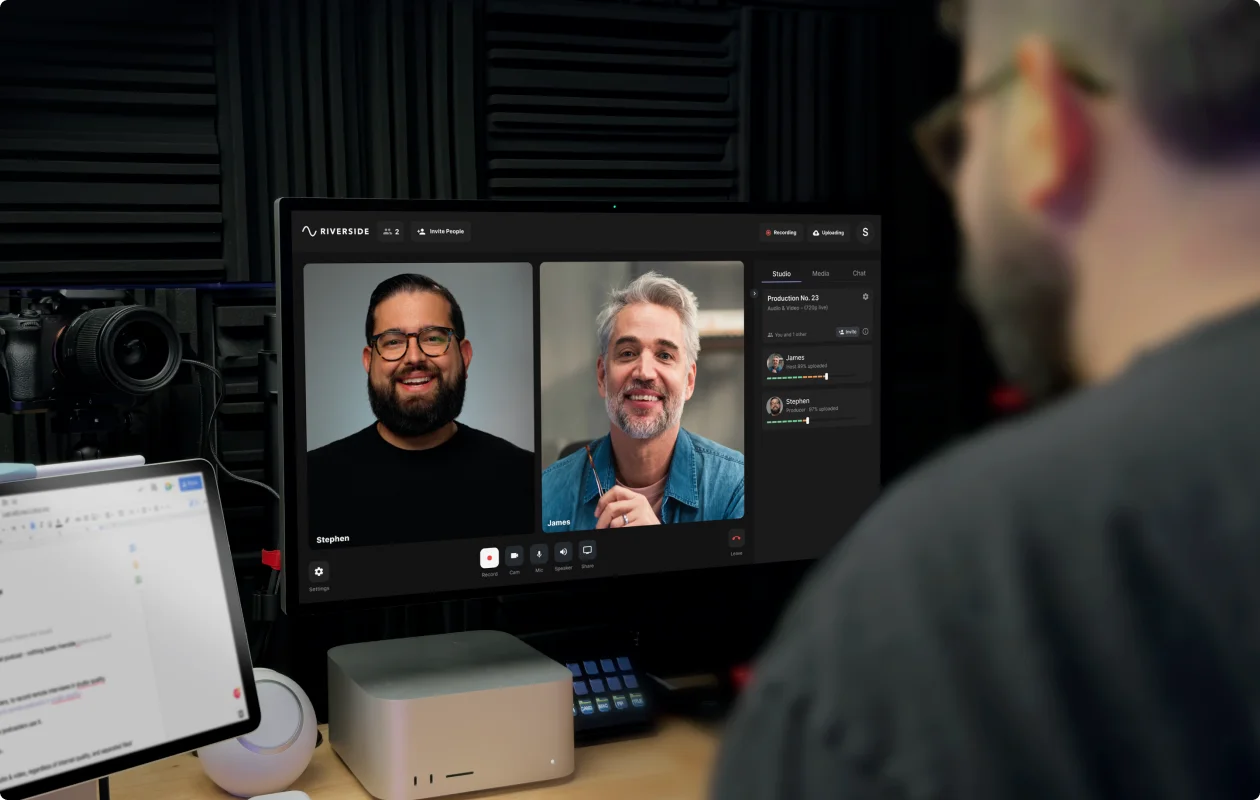
Use the first few minutes before the show to break the ice and help your guests settle into the conversation.
Jamie Maglietta treats this as a green-room chat: she brings guests in 10 to 15 minutes early but deliberately avoids discussing the planned questions. Instead, she starts a natural conversation that gives the guest a tone and rhythm to respond to.
You can also capture this authentic banter by recording immediately. Podcaster Matt LeBris hits record the minute his guest enters the room to capture the warm-up because it often contains relaxed, usable moments.
Either approach works: you can keep the pre-show chat off-record or record it for potential clips, but my advice is to turn off the recording countdown in your studio settings. A visual cue often makes guests sit up straighter and stiffen, but make sure everyone clearly knows when recording begins.
What to do after the interview
How you handle the post-interview process may dictate whether a guest actively shares your episode or completely ignores it.
However, there’s no single correct approach: some hosts provide a complete promotional package, while others deliberately ask nothing of the guest.
Here are two highly effective, yet contrasting, approaches to help you decide what works for your show.
Approach A: Give guests everything they need
Angela Hollowell treats each guest like a client moving through three defined stages: onboarding, production, and offboarding.
Within an hour of finishing the interview, she sends a thank-you email, requests a headshot if she doesn’t already have one, and provides an approximate publication date.
When the episode goes live, she sends the guest:
- Links to the published episode
- Promotional graphics
- Quote cards
- Short audio or video clips
She also tags the guest in her own social posts, allowing them to reshare the episode without having to create anything themselves. Finally, she asks whether there are other publications or communities that might feature the episode, and offers to handle that outreach.
This approach makes guest management a repeatable production workflow rather than a series of individual favors.
Approach B: Expect nothing from the guest
On the other end of the spectrum, podcaster Matt LeBris takes a hands-off approach. He sends a simple thank-you and stops there.
His philosophy is simple: having zero expectation on shares.
His reasoning is that audiences tend to remain on the platforms they already use. An Instagram share, for example, rarely converts into a podcast download.
Instead, he focuses on making the recording enjoyable enough that guests want to share it without being asked. He still tags them when the episode goes live, giving them an easy opportunity to reshare if they choose.
For Matt, publishing the episode also isn’t the end of the relationship. Engaging with your guest's content and following their updates over time builds a stronger connection than forcing an asset pack on them.
Notifying the guests when the episode airs
Several weeks may pass between recording and publication, by which point a guest may barely remember what you discussed. Additionally, guests sometimes avoid sharing a perfectly good clip simply because they don’t like how they look on camera.
My tactic is to explicitly name my favorite moment from the conversation in the go-live email.
Highlighting an insight refreshes the guest’s memory and gives them a specific idea they can write about when sharing the episode. A written prompt can also work better than relying entirely on video clips.
FAQs on Podcast Guests
Do you need guests for your podcast?
No, you don’t need guests to make a successful podcast. Many creators run effective solo or co-hosted podcasts focused on educational commentary or storytelling.
But guest interviews help you cover topics outside your personal knowledge or introduce fresh perspectives. You can invite a guest when their experience or story adds something you couldn’t provide yourself.
Do podcast guests get paid?
No, most podcast guests aren’t paid for appearing. The usual arrangement is a mutual value exchange. The host receives useful content, while the guest gains exposure and an opportunity to promote their work.
Appearance fees are typically reserved for major celebrities and sponsored appearances, or reimbursement for travel and other expenses
What are some podcasts with famous guests?
Some popular podcasts with famous guests include:
- The Joe Rogan Experience
- SmartLess
- Armchair Expert with Dax Shepard
- Conan O’Brien Needs a Friend
These shows regularly interview A-list celebrities and subject-matter experts in a long-form format.
How many guests should you have on a podcast?
Most interview podcasts work best with one guest per episode because it gives the host enough time to explore that person’s experience in depth. Two or three guests can work for debates where you want to create a dynamic group banter, but require stronger moderation to run smoothly. Bringing on more than often leads to crosstalk and makes it difficult to maintain a clear conversational flow.
Should you send podcast interview questions in advance?
Whether you should send podcast interview questions in advance depends on your guest and your interview style.
Sending talking points early helps guests prepare concise, confident answers. Jamie Maglietta shares talking points in advance and asks guests to prepare concise quotes and plan out their ideal 30-second clip. Others like Matt LeBris withhold their questions to capture more authentic, spontaneous reactions.



.webp)
%20(2).webp)
.webp)