Add music to your video in the Riverside Editor
Add music and sound effects with fades and timeline control, plus five best practices for levels.

Add music and sound effects with fades and timeline control, plus five best practices for levels.
A walkthrough of adding music to any video in Riverside, followed by five best practices so the music improves the video rather than fighting it.
The video covers:
00:00 So you want to add music to your video, maybe it's a podcast episode or YouTube video or a social media clip, whatever it is, the process is the same. So I'm going to walk you through how to add music to your video using a platform called Riverside and then make sure that you stick around until the end because we're going to go over five things that you should consider when adding music to your videos. By the end of this video, you're going to know exactly how to make your content better with added sound. Let's go. First, you will need an account on Riverside dot FM and then you'll want to log in and create a new studio for your video.
00:32 So you would just head up to this drop down menu, select new studio and then you can name your studio. I already have one created, so I'm just going to use this for this example. Once you've created your new studio, you can upload your content to the platform by selecting this upload button and then selecting the file that you'd like to upload. Make sure you select how many people are talking in this video clip as this is going to create separate tracks for each speaker in
00:57 the editor. You can also record your content directly on Riverside, which is going to help streamline this whole process. You would just head into the studio by selecting this record button. I'll link a video above on how to record on Riverside. Once your video has been uploaded and processed, you're going to hover over the thumbnail and select edit. This is the Riverside editor where you can edit your content and add music to your video. To add music under your
01:20 videos, place the playhead on the timeline where you'd like the music to start. Select the add music section underneath the timeline and select music. From here, you can browse the stock audio library that Riverside provides so you can find sound effects and royalty-free stock music in here or you can upload your own. Just make sure that it is royalty-free to avoid any issues.
01:43 Once it's uploaded, select it and you'll see that that track was added underneath the video where the playhead starts. You can adjust the duration of the music by simply hovering over the end of the clip, clicking and dragging it to take up as much of the video as you want and you can move that clip around on the timeline by simply selecting it and dragging it to wherever you'd like. Now with these three dots right here, you can adjust the volume of your music and you can
02:10 add a fade in and fade out to your music just to make that transition a little bit easier for the viewer. To add something into your content like a jingle or a transition, you can navigate through your video using this text-based editor and when you find the section where you want to add in either that sound effect or jingle, select the plus button, music, and again you can look for any of the sound effects in the stock music library or upload your own and when you add it,
02:38 you will see that that will be added in to your video. You'll see it right here on the timeline and again if you select the three dots, you can adjust the volume and the fade in and fade out and of course if you want to move it around, just select the arrows here and you can move it around to wherever you'd like in the timeline. Once you're done editing your video and adding music to it,
02:59 you would select this export button and you can export your video in up to 4k depending on the camera that you used to record. So adding music to your videos can really enhance the overall video for your viewers, but it can also ruin the experience if you don't do it properly.
03:15 So here are five best practices to consider. The music you choose should complement the overall tone and mood of your video. For example, a happy upbeat song would be suitable for a comedic video while a more somber tune would be appropriate for a dramatic scene. The tempo of the music should match the pace of your video. A fast-paced song might be really distracting if your video has a slower rhythm and vice versa. Be mindful of copyright laws when using music in your videos.
03:44 You can use royalty-free music, you can create your own original compositions, or you can get the necessary licenses for copyrighted material. The Riverside Stock Music Library are all royalty-free, but you can also find royalty-free music in YouTube's audio library or on stock music websites like Adobe Stock Audio. The music should not overpower spoken word or other sounds in your video. Try to keep it to around minus
04:08 10 to minus 20 dB lower than the speaking voice. While music can enhance your video, it also shouldn't be the main focus. The music should serve as a background element that complements the visual content, not overpowers it. So now you know how to add music to your videos. If you want more information on copyright laws and finding music for your content,
04:32 I'm going to leave a video here for you to watch next. And if you want to learn more about Riverside and what you can do with it, I'm going to leave a whole playlist of videos here. I'm also going to leave a link for you to try out Riverside in the description and you can let me know if you like it. If you want to hang out again, I will be here every single week, so make sure to subscribe so together we can learn how to create better content faster. My name is Bridget O'Rourke and I'll see you next week.
More videos you might like
A full product tour: studio and recording, AI assets, editing, then hosting, newsletters and social.
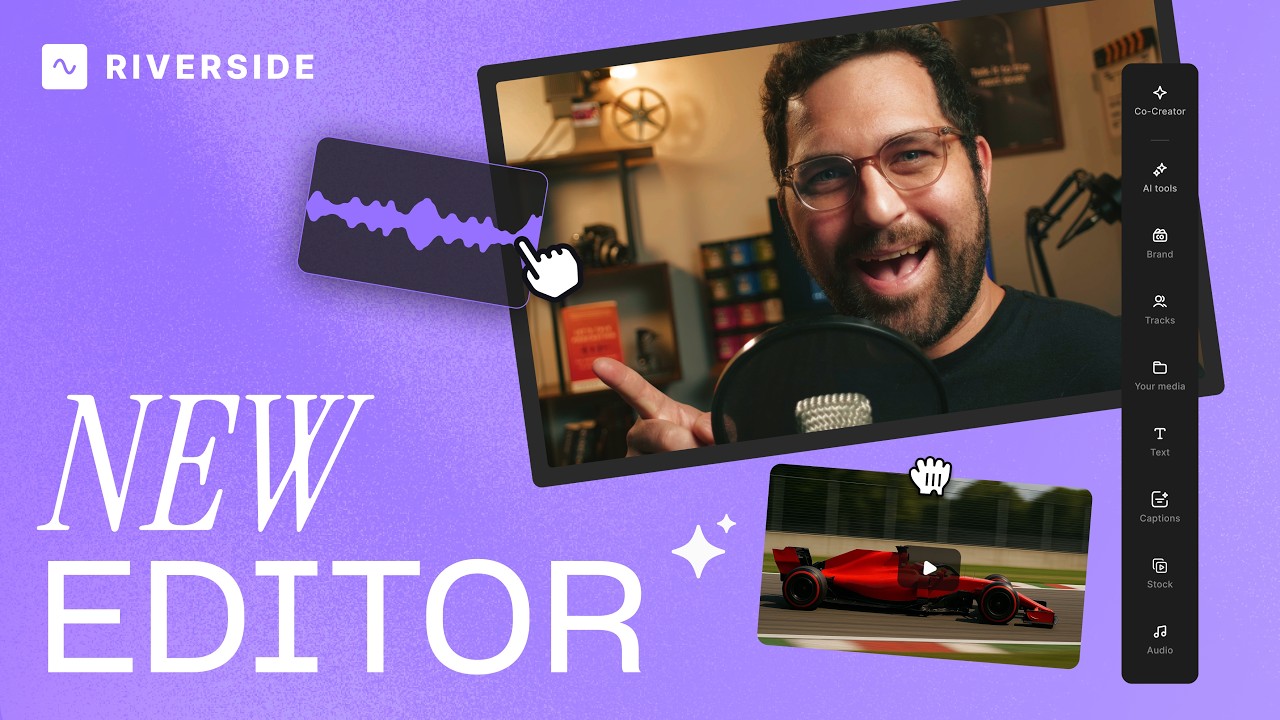
A complete editor tour: transcript and timeline editing, AI tools, layouts, scenes and exporting.
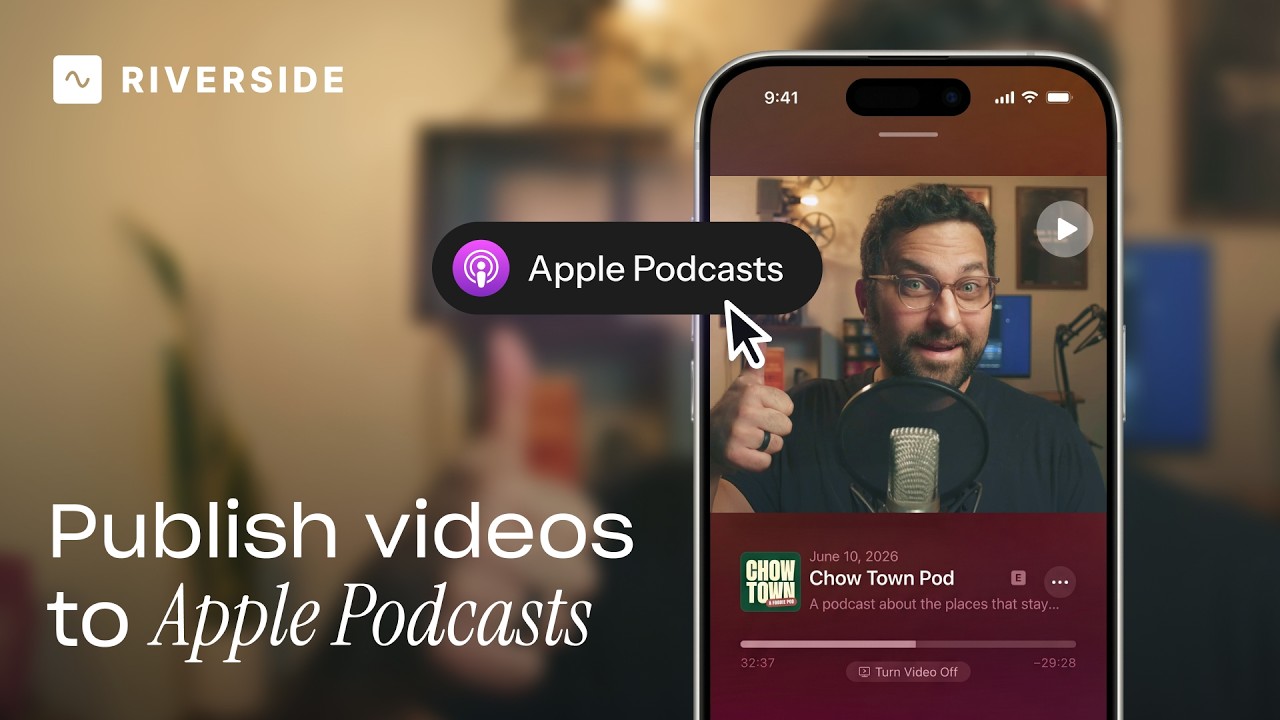
Publish video to Apple Podcasts so your audience can switch between listening and watching easily.
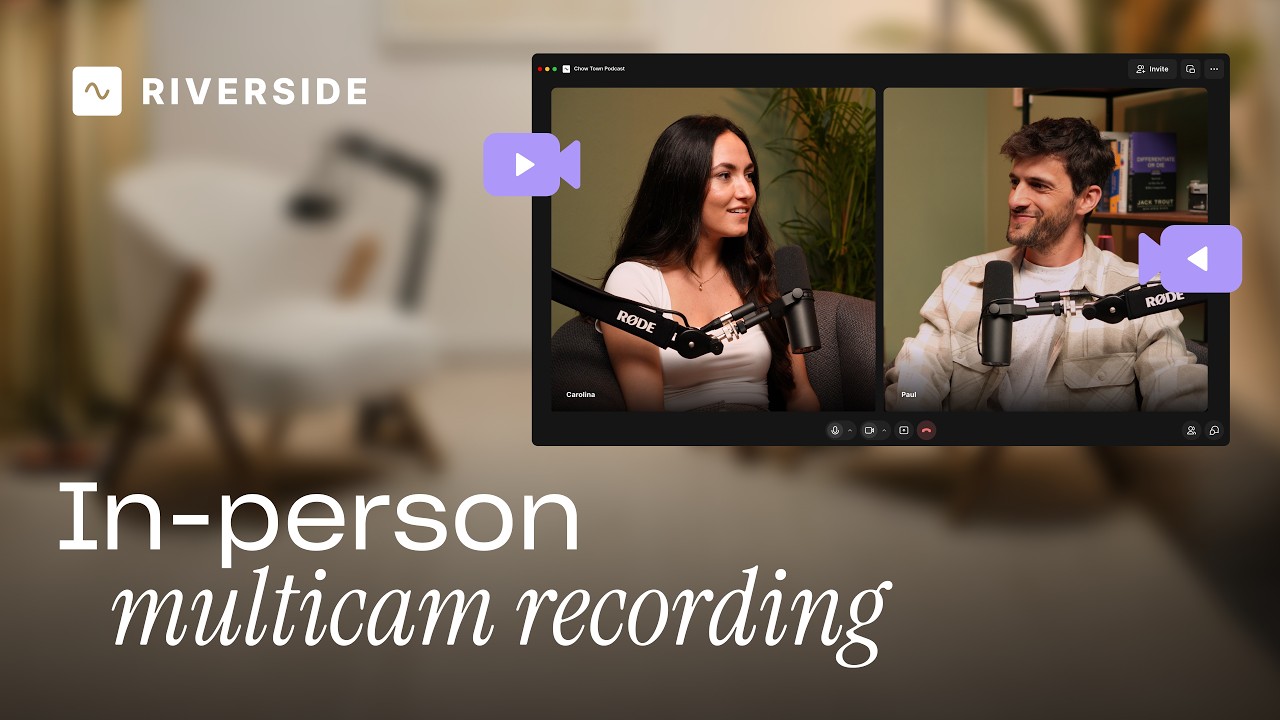
Add multiple in-person guests with their own camera and mic from one computer, as synced tracks.


.avif)
.avif)
.avif)
Got a process that works for you? Get featured by submitting your step-by-step flow. Help other creators save time, learn new tricks and improve their productions.


.avif)